
'%3e%3cpath%20fill-rule='evenodd'%20clip-rule='evenodd'%20d='M19%208.5C24.799%208.5%2029.5%2013.201%2029.5%2019C29.5%2024.6782%2024.9928%2029.3036%2019.361%2029.4939L19%2029.5C18.8794%2029.5%2018.7592%2029.498%2018.6396%2029.4939L18.2811%2029.4758C12.8174%2029.1063%208.5%2024.5574%208.5%2019C8.5%2013.201%2013.201%208.5%2019%208.5ZM22.3063%2010.6267L22.2342%2010.6539C21.3423%2011.0061%2020.5541%2011.6368%2020.5606%2012.4987C20.5631%2012.8302%2020.869%2014.8871%2020.2141%2014.8486C19.5589%2014.8102%2019.413%2013.8753%2018.7116%2013.616C17.5944%2013.2026%2016.9819%2014.3401%2017.0939%2015.3106C17.1695%2015.9655%2018.9289%2018.3871%2017.9028%2019C17.292%2019.3651%2015.7279%2017.5692%2015.1007%2017.1842C14.4805%2016.8034%2013.2758%2017.3333%2012.4974%2016.7029C11.9874%2016.2899%2012.3881%2014.4098%2012.2786%2013.8372C12.2271%2013.5698%2012.1155%2013.3689%2011.9794%2013.2166L12.0402%2013.2934C10.7653%2014.8464%2010%2016.8339%2010%2019C10%2023.8465%2013.8307%2027.7982%2018.6295%2027.9925L18.6769%2027.9747C18.8597%2027.8677%2019.0394%2027.7557%2019.216%2027.6387C19.4137%2027.4534%2019.5436%2027.2072%2019.5849%2026.9394C19.8806%2025.1222%2018.3616%2025.4302%2017.9367%2024.5622C17.5489%2023.7695%2018.5712%2023.7684%2018.5524%2021.7923C18.4607%2021.1774%2018.5279%2020.547%2018.7211%2020.0315C19.1834%2018.7987%2020.7077%2017.2643%2022.5889%2018.0081C23.5567%2018.3906%2023.1524%2019.9831%2023.4737%2020.3394C24.251%2021.2018%2025.3228%2020.6863%2026.2856%2021.2253C26.7816%2021.5032%2026.9797%2022.41%2027.056%2023.2248L27.038%2023.0528C27.6534%2021.8348%2028%2020.4579%2028%2019C28%2015.1968%2025.6409%2011.9445%2022.3063%2010.6267Z'%20fill='%23757575'/%3e%3ccircle%20cx='19'%20cy='19'%20r='10.125'%20stroke='%23757575'%20stroke-width='2.25'/%3e%3c/g%3e%3cdefs%3e%3cclipPath%20id='clip0_1827_14613'%3e%3crect%20width='24'%20height='24'%20fill='white'%20transform='translate(7%207)'/%3e%3c/clipPath%3e%3c/defs%3e%3c/svg%3e)


Picking the correct point of view can make or break your story, and the third-person omniscient can be regarded as a storytelling superpower, where you can enter any character's mind and perceive their world from all perspectives. This "all-knowing" style for beginners feels like juggling with fire, and it is easy to get confused with the third-person limited. How do you master it without losing your readers? This guide breaks down what third-person omniscient is, why it is cool, how to do it well, and how Toolsmart's Free AI Story Generator spins excellent stories into fun. Let's make that happen if you want your story to rise to new heights, whether it's a full-blown fantasy epic or just a short drama!
Part 1: What is Third-Person Omniscient?
Imagine being a narrator who can comprehend any character's thoughts, feelings, secret schemes, and what is happening everywhere in the story. That is an omniscient third-person point of view, or in simpler terms, a storytelling wizard with eyes on everything. It is a third-person limitation, where you can only be trapped in one mind; omniscient flies from one head to another or from one place to another, spilling all the juicy bits. Classic works underpinned by all this fade under Jane Eyre, while Dune still has to do the landscape-big-time drama of it all. Imagine a trip through the queen's fears, then somewhere across town, the plot brewing in a first-class rebel's mind. In your head, that is like directing an epic movie!
Here’s how it compares to third-person limited:
| Aspect | Third-Person Omniscient | Third-Person Limited |
|---|---|---|
| Knowledge Scope | Every character, event, and place | One character’s thoughts only |
| Narrative Flexibility | Jumps across time, space, and minds | Locked to one character’s view |
| Reader Experience | Big-picture, objective context | Deep, personal, subjective dive |
I am a sucker for tales narrated from an omniscient point of view, like The Name of the Wind. Peeking into the hero's mind when he is scared or catching the villain in his underhanded, sinister plots, every plot twist hits the audience like a speeding train. The guilty pleasure of knowing all the dark, spicy secrets makes you keep turning the pages.
Part 2: Why Writers Choose Third-Person Omniscient
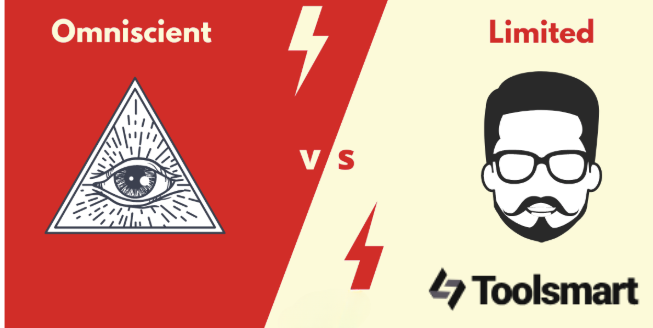
This perspective is a writer’s playground for spinning huge, vibrant stories that feel alive. Here’s why it’s such a hit.
Epic Worlds: It's fantastic for big tales like fantasy sagas or political dramas. You can show a king scheming for war, a spy creeping through shadows, and a villager scraping by—all in one chapter, building a world that feels real and connected.
Sneaky Suspense: You can spill secrets to readers the characters don't know, like a traitor's plot, while the hero trusts them, making every scene tense.
Deep Themes: It lets you weave big ideas—like power or hope—by jumping between characters, like a wealthy merchant hoarding gold. At the same time, a beggar goes hungry, giving your story layers.
Total Freedom: You can hop between places, times, or people without breaking the vibe, showing a city’s festival while an army gears up far away.
Being completely mesmerized by the omniscient narration rendering such vivid and messy life in Westeros, where every lord, knight, or peasant's point of view accentuates drama, a quick, involving sneak peek at every move of a wild and epic chess game.
Part 3: How to Use Third-Person Omniscient Like a Pro
Mastering omniscient narration takes some finesse to keep readers hooked without losing them in a whirlwind of perspectives. Here are four key tips, inspired by Quora’s techniques for omniscient POV:
Don’t Bounce Around Minds Like Crazy: Flipping between characters’ thoughts too fast can leave readers dizzy. Instead, ease them in. For example, in a battle scene, show: “General Taryn eyed the horizon, planning a sneak attack.” Then shift smoothly: “Far off, Private Jor clutched his spear, heart racing, clueless about the strategy.” This keeps your story clear and grounded.
Drop Secrets Slowly: Spilling every detail at once is too much. Tease it out: "The queen smiled, unaware of the poison in her cup, slipped there by her advisor at dawn." It builds suspense and keeps readers hooked.
Keep That God-Like Cool: Stay consistent with a slightly distant tone, not getting too chummy with one character. Try: “The city roared for peace, but the council knew war was coming.” It sounds commanding yet neutral, like a divine storyteller.
Stick to Your Big Idea: Link character thoughts to your story's central theme. For a tale about greed, write: "The merchant hoarded his gold, ignoring the beggar's cries outside," then mirror that vibe in a thief's desperate schemes later.
I've played with omniscient narration in my own short stories, and spacing out character thoughts with apparent scene shifts kept things tight. My early drafts were a mess until I learned to guide readers smoothly—it's like directing a movie where every scene flows.
Part 4: Enhancing Omniscient Writing with Toolsmart’s AI Story Generator
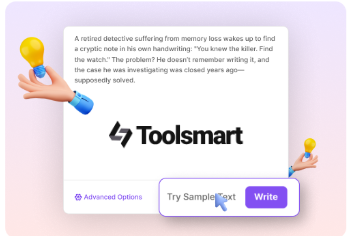
Even pro writers can struggle to juggle omniscient narration’s many voices and keep the story cohesive. Toolsmart’s Free AI Story Generator is like having a creative sidekick, crafting unique, well-structured tales across 18 genres with built-in character arcs and worldbuilding, per Toolsmart’s site. It’s free, needs no signup, and works for beginners dreaming up their first story or seasoned writers breaking through a creative slump. With thousands of templates, it’s a goldmine for omniscient storytelling.
Key Features:
18 genres (fantasy, sci-fi, thriller, romance, etc.) for tailored narratives.
Smartly weaves character development, plot progression, and world details.
Thousands of customizable templates to spark your omniscient story.
Generates stories instantly, saving hours of planning.
How to Use:
Step 1: Visit Toolsmart’s Free AI Story Generator
Step 2: Pick a genre (e.g., fantasy) and theme (e.g., betrayal or redemption).
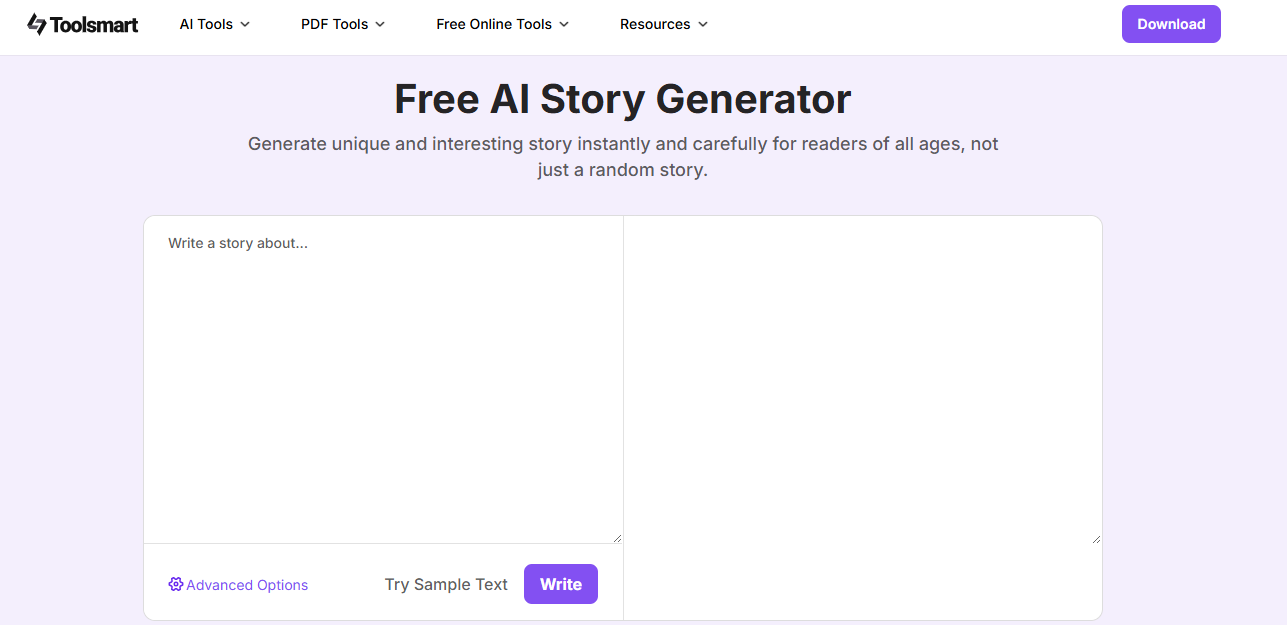
Step 3: Click “Generate” for a story with omniscient narration.
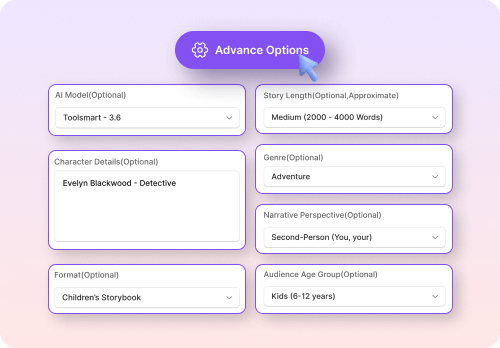
Step 4: Copy the output or tweak it for your project.
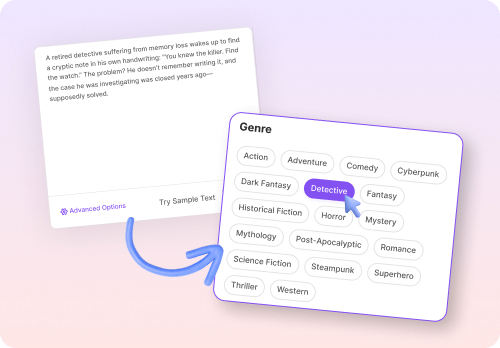
I tested using Toolsmart for a sci-fi short story, setting the mood as "space rebellion." I offered a story unfolding in a doubtful captain, crew plotting a mutiny, a planet going wild, and a seamless omniscient narration tying it all together. It saved me hours of blank-page panic, and the template gave me a firm structure to launch my thoughts. Early drafts were messy, but Toolsmart kept the perspectives organized and the story intense.
Part 5: FAQs
Q1: Can I sneak character thoughts into third-person omniscient?
You bet! Slip in thoughts with italics or free indirect style, like: The king sighed. This war’s gonna wreck everything. It pulls readers into the character's head while smoothing that all-knowing vibe.
Q2: Is omniscient POV old-school?
No way! Books like Good Omens use it for witty humor and big-picture storytelling, making it feel fresh and fun for today’s readers.
Q3: Is Toolsmart’s Story Generator cool for newbies and pros?
Yup! Its easy setup and customizable templates let beginners dive in confidently and help pros smash through writer's block.
Q4: How’s omniscient different from limited POV?
Omniscient gives you the full scoop on every character's thoughts and events, like a wide-angle lens, while limited zooms into one character's mind for a personal, up-close vibe.
Q5: Can Toolsmart tackle tricky omniscient stories?
Totally! It weaves complex tales with multiple characters and world details, perfect for epic omniscient stories without overwhelming readers with info dumps.
Summary
Third-person omniscient is like a golden ticket for weaving big, bold stories, letting you slip into every character's head and craft worlds as epic as Dune or Lord of the Rings. It's not easy—steer clear of jumping minds too fast, sprinkle info slowly, and keep your theme sharp—but it builds gripping drama and stakes that suck readers in. Toolsmart's Free AI Story Generator takes the stress out, whipping up unique stories across 18 genres with many templates, perfect for newbies or seasoned writers. Whether spinning a fantasy saga or a quick drama, these tools help you nail third-person omniscient and tell tales that keep readers glued to the page.


