
'%3e%3cpath%20fill-rule='evenodd'%20clip-rule='evenodd'%20d='M19%208.5C24.799%208.5%2029.5%2013.201%2029.5%2019C29.5%2024.6782%2024.9928%2029.3036%2019.361%2029.4939L19%2029.5C18.8794%2029.5%2018.7592%2029.498%2018.6396%2029.4939L18.2811%2029.4758C12.8174%2029.1063%208.5%2024.5574%208.5%2019C8.5%2013.201%2013.201%208.5%2019%208.5ZM22.3063%2010.6267L22.2342%2010.6539C21.3423%2011.0061%2020.5541%2011.6368%2020.5606%2012.4987C20.5631%2012.8302%2020.869%2014.8871%2020.2141%2014.8486C19.5589%2014.8102%2019.413%2013.8753%2018.7116%2013.616C17.5944%2013.2026%2016.9819%2014.3401%2017.0939%2015.3106C17.1695%2015.9655%2018.9289%2018.3871%2017.9028%2019C17.292%2019.3651%2015.7279%2017.5692%2015.1007%2017.1842C14.4805%2016.8034%2013.2758%2017.3333%2012.4974%2016.7029C11.9874%2016.2899%2012.3881%2014.4098%2012.2786%2013.8372C12.2271%2013.5698%2012.1155%2013.3689%2011.9794%2013.2166L12.0402%2013.2934C10.7653%2014.8464%2010%2016.8339%2010%2019C10%2023.8465%2013.8307%2027.7982%2018.6295%2027.9925L18.6769%2027.9747C18.8597%2027.8677%2019.0394%2027.7557%2019.216%2027.6387C19.4137%2027.4534%2019.5436%2027.2072%2019.5849%2026.9394C19.8806%2025.1222%2018.3616%2025.4302%2017.9367%2024.5622C17.5489%2023.7695%2018.5712%2023.7684%2018.5524%2021.7923C18.4607%2021.1774%2018.5279%2020.547%2018.7211%2020.0315C19.1834%2018.7987%2020.7077%2017.2643%2022.5889%2018.0081C23.5567%2018.3906%2023.1524%2019.9831%2023.4737%2020.3394C24.251%2021.2018%2025.3228%2020.6863%2026.2856%2021.2253C26.7816%2021.5032%2026.9797%2022.41%2027.056%2023.2248L27.038%2023.0528C27.6534%2021.8348%2028%2020.4579%2028%2019C28%2015.1968%2025.6409%2011.9445%2022.3063%2010.6267Z'%20fill='%23757575'/%3e%3ccircle%20cx='19'%20cy='19'%20r='10.125'%20stroke='%23757575'%20stroke-width='2.25'/%3e%3c/g%3e%3cdefs%3e%3cclipPath%20id='clip0_1827_14613'%3e%3crect%20width='24'%20height='24'%20fill='white'%20transform='translate(7%207)'/%3e%3c/clipPath%3e%3c/defs%3e%3c/svg%3e)


The resume prompt that does the most work is not the summary prompt. It is the bullet rewrite, and the difference is one instruction: tell ChatGPT to mark gaps instead of inventing numbers.
Start With This Prompt
Rewrite my resume bullets using the STAR method (situation, task, action, result). Use the job description below as context. If a bullet does not have a measurable result, mark it [needs metric] instead of inventing one. Do not add any experience, skill, or achievement that is not in my text.

Job description: [paste]

My bullets: [paste]
That [needs metric] marker is the whole trick. Left to itself, ChatGPT rounds "helped with onboarding" into "improved team efficiency by 37%." With the marker, it tells you which bullets need real numbers, and you go find them in your records instead of publishing a made-up one. A resume with two honest bullets beats one with ten polished lies, and hiring managers have seen enough AI resumes to check.
Below are eight prompts that cover the full loop: rewrite, tailor, de-AIify, and verify. Use them in order, and do not skip the truth rules in the fourth section.

- Always add an anti-hallucination instruction. "[needs metric]" and "do not add anything not in my text" prevent the most damaging AI failure on a resume: invented achievements.
- Match first, write second. The keyword gap prompt shows what to change before you change anything.
- Run every draft through the de-AIify pass. AI-flavored wording is the easiest thing for a recruiter to notice.
- Never paste your name, phone, or address into ChatGPT. Strip personal identifiers before anything else.
The Rest of the Prompt Kit
Seven more prompts, organized by task. Replace the bracketed parts, paste them one at a time, and keep the job description in the same chat so the model stays anchored to it.
Professional summary
Rewrite my professional summary in 3 sentences max. Sentence 1: who I am professionally. Sentence 2: my biggest measurable achievement. Sentence 3: what I bring to this role. Use the job description below for direction. Do not use "results-driven," "passionate," or other corporate filler. Do not invent achievements.

Job description: [paste]

Current summary: [paste]
The three-sentence cap matters more than the wording. Without it, ChatGPT pads a summary into corporate filler. With it, every sentence has a job.
Keyword gap analysis
Read the job description below and list the 10 most important keywords: skills, tools, methodologies. Then read my resume and tell me which of those keywords I am missing or underusing. Do not add them to my resume. Just flag the gaps, and for each gap say where I could honestly add it.

Job description: [paste]

My resume: [paste]
Ask for gaps, not additions. ChatGPT will happily stuff every keyword into your resume, and stuffing is what gets a resume screened out. You decide which keywords genuinely apply to you.
De-AIify pass
Edit my resume so it sounds like a person wrote it. Keep every fact, number, and job title. Change only the wording: cut buzzwords ("synergy," "leverage," "spearheaded" overuse), remove "responsible for" repetition, shorten any bullet over two lines, and vary sentence openings. Keep the tone professional and specific. Mark anything you changed meaning on with [check me].

My resume: [paste]
AI-written resumes share tells: the same three verbs recycled through every bullet, perfectly parallel sentences, vague "responsible for" lines. This pass breaks the pattern. The [check me] marker catches anything the model quietly bent out of shape. The same rules apply to cover letters and thank-you notes — our guide on writing like a human with ChatGPT covers the full method.
Match scoring
Compare my resume to the job description below. Score the match 0-100 on five dimensions: keyword overlap, experience relevance, seniority match, industry fit, and recency. For each score, explain in one sentence what pulled it down and name one concrete change that would raise it.

Job description: [paste]

My resume: [paste]
"Your industry fit is 30 because the job mentions logistics four times and your resume says nothing about it" is actionable. "Your resume could be better" is not. Forcing scores and one-sentence reasons gets you the first kind.
Weakness audit
What is the single weakest part of my resume? Explain why it is weak. If you have enough context, suggest a rewrite. If you do not, ask me one specific question and wait for my answer before suggesting anything.

My resume: [paste]
The "ask me one question" branch is the safety valve. Models default to confident guesses. This prompt makes ChatGPT admit when it needs information only you have — which is most of the time on a resume.
Career change translator
I am moving from [current field] to [target field]. Read my resume and the job description below. Identify my transferable skills, translate field-specific language into terms a hiring manager in [target field] will understand, and rewrite five bullets using the job's own vocabulary. Keep every fact. Mark any skill you had to infer with [confirm].

Job description: [paste]

My resume: [paste]
Field-specific jargon is the career changer's biggest leak. "Managed SKU forecasts" means nothing to a marketing director until it becomes "planned inventory across 40 products." This prompt does that translation without inventing the underlying work.
Final tailoring pass
I am applying to the job below. Rewrite my resume for this specific application: reorder bullets so the most relevant ones come first, tighten the summary around the role's top requirement, and add nothing that is not already in my resume. Output the full revised resume.

Job description: [paste]

My resume: [paste]
Run this last, once per application. The first seven prompts build a strong base resume. This one spends it well.
The Rules That Make Any Resume Prompt Work
Independent tests of resume prompts keep landing on the same four rules, and one widely shared write-up from a developer who reworked his own resume put it cleanly: every prompt that worked was specific about output format and let the model say "I don't know." Every prompt that failed was vague.
- Demand a specific output format. Numbered bullets, a three-sentence cap, a 0-100 score. Formats force structure; structure exposes gaps.
- Give permission to leave things blank. "[needs metric]," "ask me one question," "[confirm]." The model should flag uncertainty, not fill it with invention.
- Cap the length. Three sentences, two lines per bullet, five bullets. Caps stop the padding reflex.
- Compare before fixing. Score the match, find the gaps, flag the weakness — then rewrite. Fix-first prompts produce smooth, wrong text.
The classic failure is "make my resume more impressive." Vague instructions get vague output, and on a resume, vague means fabricated. If a prompt does not say what to keep, what to cap, and what not to invent, add those three lines before you send it.
The Truth Rules: Stop ChatGPT from Inventing Your Career
Prompts control style. You control the facts. Four rules keep the facts honest.
- Strip personal identifiers before you paste. Name, phone number, email, address, employer names if you prefer. The prompts above never need them.
- Treat every number as guilty until proven. ChatGPT invents metrics fluently. Cross-check each figure against a payslip, a performance review, or a dashboard before it goes public.
- Supply achievements yourself. The model does not know what you did. Paste real outcomes as raw notes and let it phrase them; never let it imagine the outcome.
- Mark uncertain wording and read it twice. "[check me]" and "[confirm]" exist because the model bends meaning while polishing. Anything marked is a claim you must verify.
There is an easy mental test for the finished resume: can you point to the evidence behind every line? If a bullet makes you hesitate, the model probably wrote a truth-adjacent sentence. Fix it or cut it.
ATS Safety: What Prompts Can't Fix
Prompts fix wording. They cannot fix the file, and most rejections happen before a human reads anything.
- Send the format the application asks for. If it says DOCX, send DOCX. If it says PDF, send PDF. An unsupported format can bounce a perfect resume.
- Skip photos, tables, text boxes, and columns. Parsers read top to bottom, left to right. Anything fancier risks jumbling your bullet order.
- Keep keywords honest. Some practitioners report that a keyword density above roughly 2-3% starts looking like stuffing to ATS systems and reviewers. Match the job description, but do not wallpaper your resume with it.
- Spell the exact skill names from the job ad. "Excel" is not "spreadsheets" to a parser looking for "Excel."
One more check that costs nothing: open your exported file and try to select the text. If you can highlight it line by line in the right order, a parser probably can too.
From Prompt to Polished Resume
The prompts get the words right. The document still needs a home. If you are drafting from scratch, start from a real template instead of a blank page: WPS Office's template library includes resume templates in standard layouts that survive ATS parsing, and you can paste the ChatGPT output straight into one.
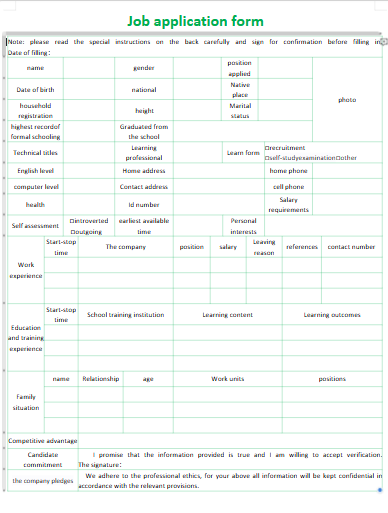
From there, apply the same prompts inside the document — WPS AI can polish a bullet or tighten a summary with the de-AIify rules above, and everything stays in one file instead of hopping between a chat tab and a document.
If you want to go deeper on specific parts: we have a guide to the best skills for a resume, and a look at resume summary tools if you want the summary done outside ChatGPT.
Frequently Asked Questions
Is it okay to use ChatGPT for my resume?
Yes, as a writing tool, not a fact source. Use it to phrase, tighten, and tailor what you give it. Verify every number and claim it produces, and keep the anti-hallucination markers in your prompts. The moment it starts inventing experience, stop.
Can recruiters or ATS systems detect AI-written resumes?
Detectors are unreliable in both directions, so do not chase a detector score. What recruiters do notice are patterns: recycled verbs, vague "responsible for" lines, and perfectly parallel sentences. The de-AIify pass removes exactly those. For ATS systems, the file format matters more than the AI question — see the ATS section above.
What should I never paste into ChatGPT?
Personal identifiers: your name, phone number, email, street address, and anything else that can identify you. The prompts above work fine with those removed. Employer names can stay if you are comfortable; strip them too if you are not.
Can one ChatGPT prompt tailor my resume to every job?
Not in one shot, but the keyword gap prompt followed by the final tailoring pass comes close for each application. Run them per job, keep the job description in the same chat, and always re-read the output with the truth rules before sending.
Can I use these prompts with WPS AI instead of ChatGPT?
Yes. The rules are model-agnostic. In WPS Office, you can draft and polish directly inside a resume template with WPS AI, which keeps the resume, the prompts, and the edits in one document instead of a chat window.
The Bottom Line
A good ChatGPT resume prompt is a role, a cap, and an honesty clause. The best single upgrade is the [needs metric] marker, because the one failure that ends a candidacy is an invented number. Run the eight prompts in order — rewrite, gap-check, de-AIify, score, audit, tailor — and spend the last ten minutes on the truth rules. Your resume will be shorter, sharper, and entirely yours.
When the wording is done, download WPS Office free and drop the result into a clean resume template — the file format is the last thing standing between you and the recruiter, and it costs one export to get right.
Also Read:
- 1. Gemini AI Photo Prompts for Girls: 10 Copy & Paste Prompts for Stunning, Aesthetic Portraits
- 2. 11 ChatGPT Prompts for Reviewing a PDF (Copy-Paste, by Task)
- 3. Best ChatGPT Resume Prompts: Write a Resume That Gets Interviews
- 4. Best ChatGPT Prompts for Every Task: 100+ Copy-and-Paste Prompts
- 5. 6 ChatGPT Prompts to Write Like a Human (Copy-Paste)
- 6. Copy & Paste AI Prompts for a Family of 4: 10 Prompts for a Perfect Family Portrait



AI enthusiast with 10 years in tech and writing. Follow me for the latest insights on AI trends and tools to boost your writing, workplace efficiency, and productivity!