
'%3e%3cpath%20fill-rule='evenodd'%20clip-rule='evenodd'%20d='M19%208.5C24.799%208.5%2029.5%2013.201%2029.5%2019C29.5%2024.6782%2024.9928%2029.3036%2019.361%2029.4939L19%2029.5C18.8794%2029.5%2018.7592%2029.498%2018.6396%2029.4939L18.2811%2029.4758C12.8174%2029.1063%208.5%2024.5574%208.5%2019C8.5%2013.201%2013.201%208.5%2019%208.5ZM22.3063%2010.6267L22.2342%2010.6539C21.3423%2011.0061%2020.5541%2011.6368%2020.5606%2012.4987C20.5631%2012.8302%2020.869%2014.8871%2020.2141%2014.8486C19.5589%2014.8102%2019.413%2013.8753%2018.7116%2013.616C17.5944%2013.2026%2016.9819%2014.3401%2017.0939%2015.3106C17.1695%2015.9655%2018.9289%2018.3871%2017.9028%2019C17.292%2019.3651%2015.7279%2017.5692%2015.1007%2017.1842C14.4805%2016.8034%2013.2758%2017.3333%2012.4974%2016.7029C11.9874%2016.2899%2012.3881%2014.4098%2012.2786%2013.8372C12.2271%2013.5698%2012.1155%2013.3689%2011.9794%2013.2166L12.0402%2013.2934C10.7653%2014.8464%2010%2016.8339%2010%2019C10%2023.8465%2013.8307%2027.7982%2018.6295%2027.9925L18.6769%2027.9747C18.8597%2027.8677%2019.0394%2027.7557%2019.216%2027.6387C19.4137%2027.4534%2019.5436%2027.2072%2019.5849%2026.9394C19.8806%2025.1222%2018.3616%2025.4302%2017.9367%2024.5622C17.5489%2023.7695%2018.5712%2023.7684%2018.5524%2021.7923C18.4607%2021.1774%2018.5279%2020.547%2018.7211%2020.0315C19.1834%2018.7987%2020.7077%2017.2643%2022.5889%2018.0081C23.5567%2018.3906%2023.1524%2019.9831%2023.4737%2020.3394C24.251%2021.2018%2025.3228%2020.6863%2026.2856%2021.2253C26.7816%2021.5032%2026.9797%2022.41%2027.056%2023.2248L27.038%2023.0528C27.6534%2021.8348%2028%2020.4579%2028%2019C28%2015.1968%2025.6409%2011.9445%2022.3063%2010.6267Z'%20fill='%23757575'/%3e%3ccircle%20cx='19'%20cy='19'%20r='10.125'%20stroke='%23757575'%20stroke-width='2.25'/%3e%3c/g%3e%3cdefs%3e%3cclipPath%20id='clip0_1827_14613'%3e%3crect%20width='24'%20height='24'%20fill='white'%20transform='translate(7%207)'/%3e%3c/clipPath%3e%3c/defs%3e%3c/svg%3e)


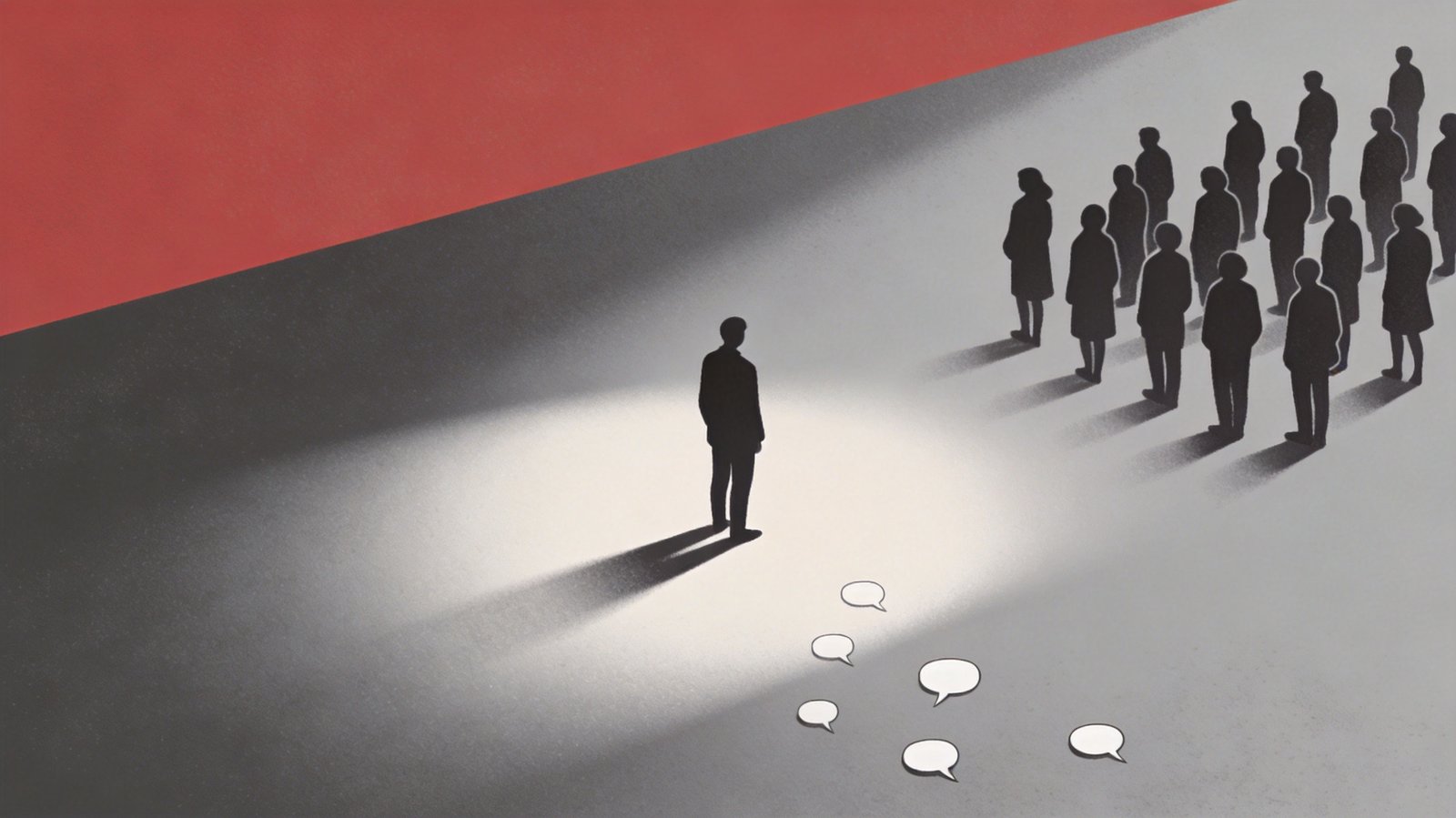
To cancel someone is to withdraw public support over something they said or did. Here’s how the slang works, what it is not, and why it is so contested.
Cancel Meaning: Quick Answer
Cancel means to withdraw public support from someone over their behaviour. Five quick examples:
- “he got cancelled after that post”
- “cancelling people over old tweets is exhausting”
- “she was cancelled, then quietly un-cancelled”
- “you can criticise someone without cancelling them”
- “that’s a call-out, not a cancel”
Definition and Origin
As slang, to cancel someone means to withdraw public support — to stop watching, following, buying or amplifying them after something harmful or offensive they did. It is collective consumer pressure rather than an official punishment, and it is distinct from the dictionary sense, which is simply “to call something off.”
The slang sense grew out of Black Twitter in the mid-2010s, where “cancelled” marked a public withdrawal of support. By the late 2010s “cancel culture” had become a political argument in its own right, which is why the word now arrives loaded from every direction.
How to Use Cancel in Chats and Texts
- “He was cancelled for a week and then everyone moved on.”
- “I would rather call the behaviour out than cancel the person.”
- “The brand got cancelled over the ad, and the apology came fast.”
Variations and Related Terms
- Call-out — naming harmful behaviour without demanding a full boycott
- Boycott — the organised, economic version of the same pressure
- Cancelled — the resulting state — “he is cancelled”
- Deplatform — removal from a platform, which is a different mechanism
Social Media and Meme Usage
Cancelling is a crowd action, which is exactly why it is contested: it can hold powerful people accountable, and it can also pile onto someone who simply made a bad joke. Online, the word is used both as a threat and as a complaint about the threat.
Common Mistakes and Etiquette
- C
- a
- l
- l
- i
- n
- g
- a
- s
- i
- n
- g
- l
- e
- c
- r
- i
- t
- i
- c
- i
- s
- m
- a
- c
- a
- n
- c
- e
- l
- l
- a
- t
- i
- o
- n
- —
- m
- o
- s
- t
- d
- i
- s
- a
- g
- r
- e
- e
- m
- e
- n
- t
- s
- a
- r
- e
- n
- o
- t
- c
- a
- n
- c
- e
- l
- l
- a
- t
- i
- o
- n
- s
- .
- C
- a
- n
- c
- e
- l
- l
- i
- n
- g
- o
- v
- e
- r
- a
- j
- o
- k
- e
- r
- a
- t
- h
- e
- r
- t
- h
- a
- n
- g
- e
- n
- u
- i
- n
- e
- h
- a
- r
- m
- .
- A
- s
- s
- u
- m
- i
- n
- g
- c
- a
- n
- c
- e
- l
- l
- e
- d
- i
- s
- p
- e
- r
- m
- a
- n
- e
- n
- t
- :
- c
- a
- r
- e
- e
- r
- s
- d
- o
- c
- o
- m
- e
- b
- a
- c
- k
- ,
- o
- f
- t
- e
- n
- w
- i
- t
- h
- i
- n
- m
- o
- n
- t
- h
- s
- .
How to Use Cancel Like a Pro
- Be precise: a call-out names behaviour, a cancel withdraws support.
- Match the response to the harm; not everything deserves a boycott.
- Remember it is a social action, not a legal one — the person keeps their rights.
- If you mean “I stopped watching,” say that instead of “cancelled.”
Cancel Meaning: FAQs
What does cancel mean in slang?
It means to withdraw public support — unfollowing, not watching, not buying — from someone after harmful or offensive behaviour.
Where does the slang come from?
It spread from Black Twitter in the mid-2010s and became a wider argument about “cancel culture” by the late 2010s.
What is the difference between a call-out and cancelling?
A call-out publicly names the behaviour. Cancelling goes further and withdraws support entirely, often with a boycott.
Is being cancelled permanent?
Usually not. Cancellation is social and temporary, and public figures often return within months.
Trusted Sources for the Cancel Meaning
The Bottom Line
Cancel is a crowd standing up — sometimes exactly right, sometimes wildly disproportionate. Use it precisely, save it for real harm, and remember that withdrawing your support is allowed to be quieter than a campaign.